
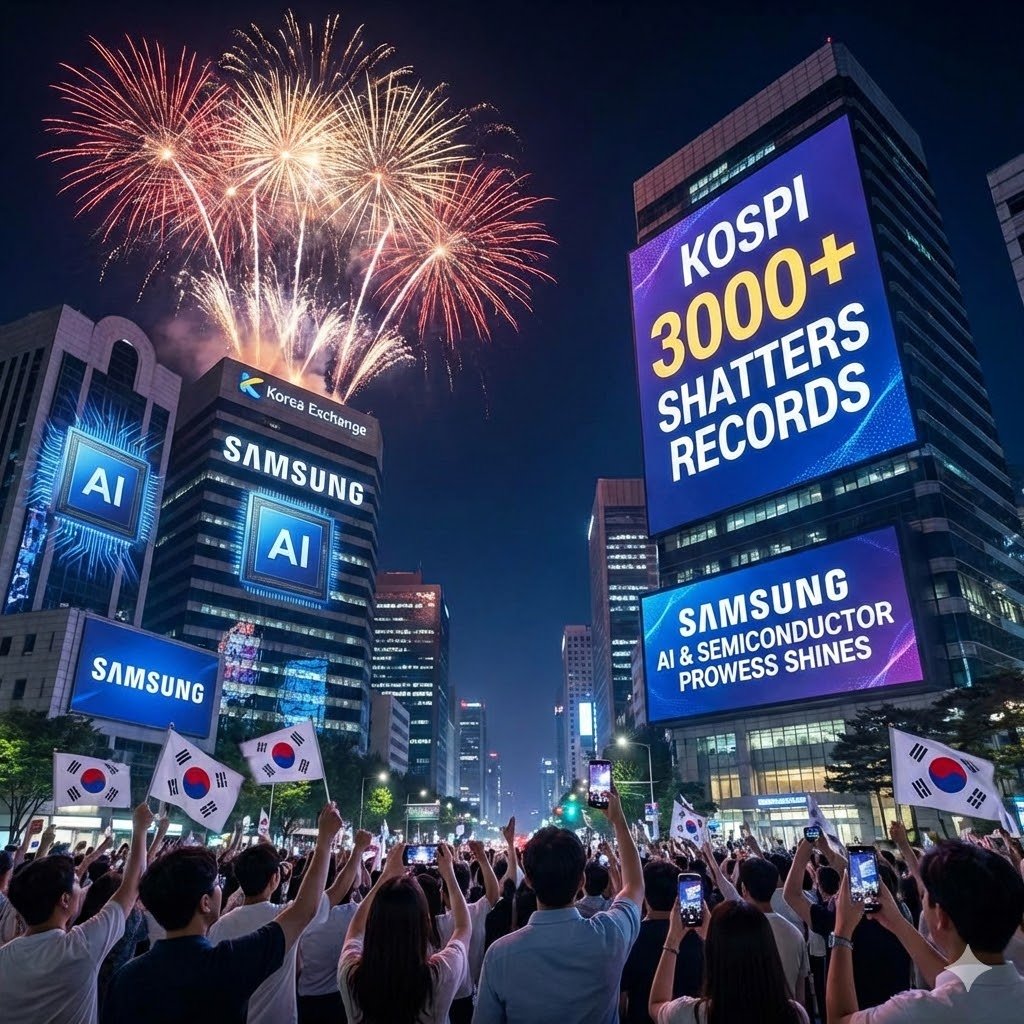
KOSPI Shatters Records Amid Tech Boom and Global Tailwinds: A Deep Dive into South Korea’s Market Ascent
The South Korean stock market has commenced the new year with an electrifying surge, as the benchmark KOSPI index not only breached the significant 4,600-point mark but also set a new all-time record, starting the trading day at an impressive 4,639.89, up 1.17%. This monumental rise isn’t merely a fleeting moment; it signifies a robust momentum driven by a confluence of global economic tailwinds, particularly from a buoyant New York market, and strategic advancements within South Korea’s powerhouse technology sector. The optimism is palpable, with many market observers now eyeing the ambitious 5,000-point threshold for the KOSPI.
At the heart of this rally are the nation’s market titans. Samsung Electronics, the undisputed leader in market capitalization, began trading up 1.44% at 141,000 won, while fellow semiconductor giant SK Hynix followed suit with a 1.48% increase to 755,000 won. These gains are not isolated; a broad spectrum of major players, including Samsung Biologics (+1.12%), LG Energy Solution (+3.17%), Hyundai Motor (+1.64%), and Doosan Enerbility (+3.33%), also contributed significantly to the market’s ascent. Notably, the surge wasn’t solely driven by institutional buying; individual investors, often referred to as “ants” in the Korean market, have played a pivotal role in pushing the index to new heights, demonstrating strong confidence in the domestic economy and corporate prospects. Even the KOSDAQ index, after an initial dip, managed a commendable rebound, signaling broad-based market strength.
The AI Revolution Fuels Semiconductor Dominance
The primary engine behind this market ebullience is undoubtedly the burgeoning artificial intelligence (AI) sector and its insatiable demand for high-performance memory chips. Reports indicate a severe shortage of memory chips, with prices projected to soar by as much as 60% in the first quarter alone. This unprecedented demand, particularly for AI and server-grade memory, is creating a golden era for D-RAM market leaders like Samsung Electronics, SK Hynix, and Micron, all of whom are experiencing record performance and soaring stock valuations. This isn’t just a cyclical upswing; it’s a structural shift driven by the foundational role of advanced memory in AI infrastructure.
Samsung Electronics, in particular, is not merely reacting to market conditions but actively shaping the future of AI memory. The company is strategically filing a series of trademarks related to High Bandwidth Memory (HBM), signaling its aggressive ambition to cement leadership in the next-generation AI memory market. Their 6th-generation HBM4, which boasts significant design improvements, has reportedly received glowing evaluations from none other than Nvidia, a crucial endorsement from a company at the forefront of AI hardware. This move to secure proprietary HBM technology suggests Samsung’s intent to “rewrite memory standards,” moving beyond generic specifications to establish its own unique and dominant position in this critical component of the AI supply chain. This proactive stance, combining cutting-edge innovation with strategic intellectual property management, positions Samsung not just as a beneficiary but as a principal architect of the AI future.
Broader Innovation and Supply Chain Resilience
The positive momentum extends beyond core memory manufacturing, reflecting a robust and dynamic ecosystem. Key suppliers are also benefiting from Samsung’s expansion and technological push. Justem, for instance, saw its stock surge by nearly 30% on news of additional orders from Samsung Electronics, underscoring the health and growth of the semiconductor equipment supply chain. Furthermore, TEMC, a critical supplier of special gases, is expanding its production facilities in Japan and Singapore. TEMC’s collaboration with both Samsung Electronics and SK Hynix on neon gas recycling technology for semiconductor lithography processes highlights a dual focus on technological efficiency and environmental sustainability – essential for long-term industry leadership.
Samsung’s innovation is not confined to semiconductors. The company is reportedly planning to integrate CoE (Chip-on-Edge) OLED technology into its upcoming Galaxy S26 Ultra, a move that could also see this advanced display technology adopted by Apple for its rumored ‘iPhone Fold.’ This demonstrates Samsung’s continued leadership in display technology, a crucial area for mobile innovation and a diversification of its high-tech prowess beyond memory chips. Such advancements not only enhance product competitiveness but also reinforce Samsung’s reputation as a global technology innovator, influencing future standards across multiple device categories.
External Factors and Investor Confidence
The rally also benefits from favorable external factors. The “New York tailwind” refers to the positive sentiment emanating from Wall Street, which often influences global markets. Furthermore, specific sectoral boosts, such as the rise in automotive stocks like Hyundai, are tied to anticipation of favorable outcomes regarding the impending US Trump reciprocal tariff ruling. This demonstrates how a mix of global economic conditions and specific geopolitical developments can converge to create a powerful impetus for market growth.
The collective buying power of individual and institutional investors underscores a deeply rooted confidence in the market’s trajectory. This isn’t merely speculative trading; it reflects a belief in the fundamental strength of South Korean companies, their capacity for innovation, and their critical role in global technology supply chains. With the KOSPI nearing the psychological milestone of 5,000 points, the market is signaling not just a recovery, but a potentially transformative era of growth, powered by intelligent technology and strategic foresight.
Leave a Reply
You must be logged in to post a comment.