
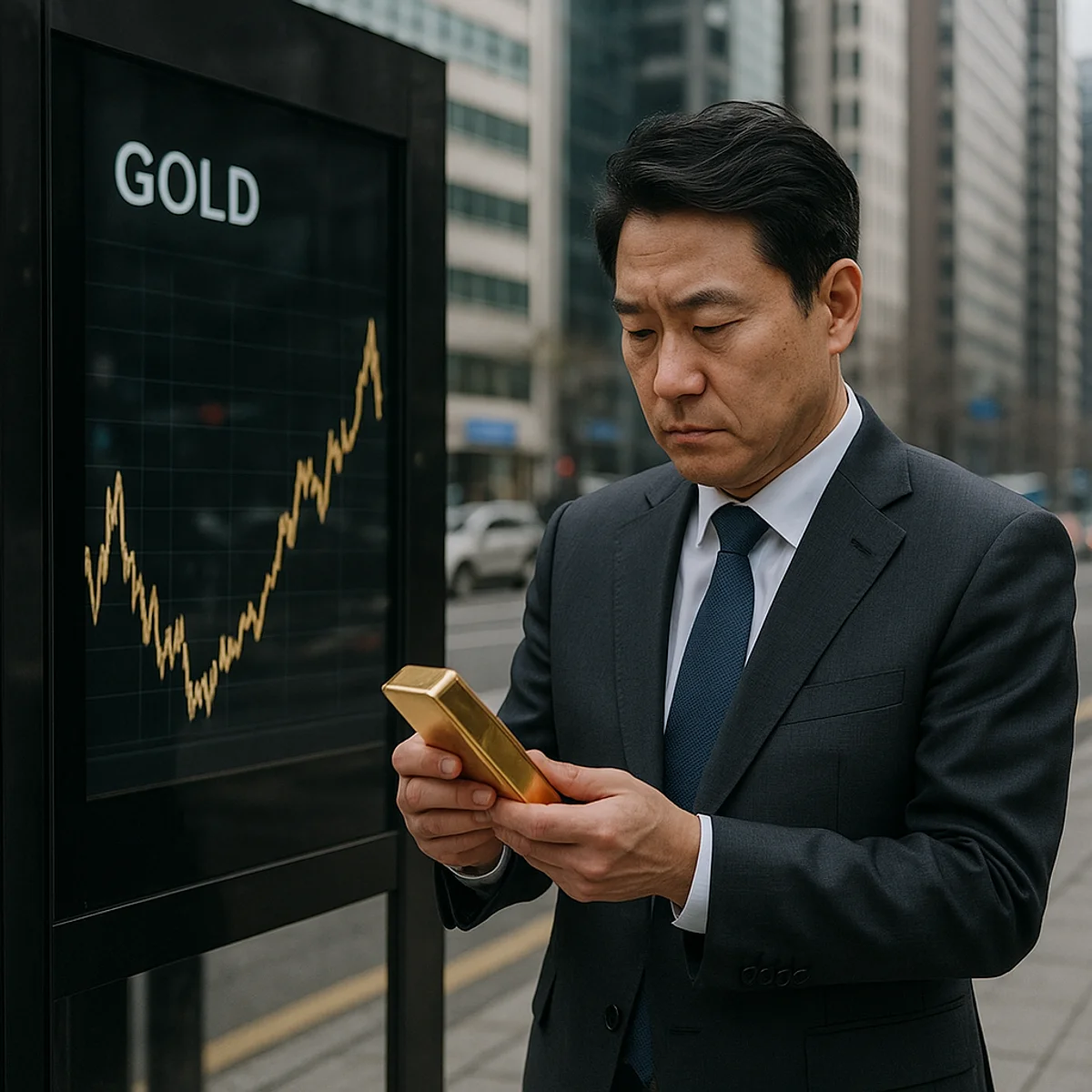
Current Trends and Influencing Factors in South Korea Gold Price
The South Korea gold price remains a significant economic indicator reflecting both domestic and international market sentiments. As of late December, gold prices in South Korea have experienced notable fluctuations driven by a complex interplay of global investment psychology, US monetary policy decisions, and geopolitical developments. This article delves into the recent trends affecting gold prices in South Korea, providing a comprehensive overview for investors and observers.
South Korea Gold Price: Recent Developments and Market Dynamics
On December 19, the price of pure gold (24K, 3.75 grams) in South Korea hovered around 771,000 to 774,000 Korean won, according to trading data. This level reflects a slight adjustment from previous highs, influenced by international gold price movements and domestic factors such as currency exchange rates and supply-demand dynamics.
Internationally, gold prices have remained near historically high levels, following a peak recorded in October. However, recent days have seen a mild correction attributed to technical adjustments and profit-taking by investors. Key influences include statements from Federal Reserve officials indicating a cautious approach to future interest rate cuts, which tempered expectations of aggressive monetary easing. This shift reduced some of the safe-haven demand for gold, as lower interest rates typically increase gold’s appeal by reducing opportunity costs.
Moreover, the US dollar’s relative strength has exerted downward pressure on gold prices. Gold traditionally moves inversely to the dollar; thus, a stronger dollar tends to make gold more expensive in other currencies, dampening demand. Recent US employment data also played a role, with mixed signals about labor market health leading to cautious investor behavior ahead of major economic releases such as the Consumer Price Index (CPI).
Geopolitical tensions, including heightened sanctions on Venezuela and ongoing conflicts involving Russia and Ukraine, have maintained some underlying support for gold as a safe-haven asset. However, since these risks were already factored into prices, they did not trigger a significant surge.
Domestically, South Korea’s gold market is influenced by factors such as physical demand, currency fluctuations, and local premiums. Various private exchanges report gold buying prices around 760,000 to 900,000 Korean won per 3.75 grams, depending on purity and market conditions. The spread between buying and selling prices reflects liquidity and transaction costs in the local market.
Background Context: Gold Price as an Economic Indicator
Gold prices in South Korea are not only a reflection of global commodity markets but also serve as a barometer for economic stability and investor confidence. Historically, gold has been a preferred asset during times of uncertainty due to its intrinsic value and limited supply. South Korea, with its robust economy and active trading platforms, closely monitors gold prices as part of its broader financial market indicators.
Changes in gold prices can signal shifts in inflation expectations, currency stability, and geopolitical risk perceptions. For example, rising gold prices often indicate increased inflation fears or economic instability, prompting investors to seek protection. Conversely, declining prices may suggest confidence in economic growth and stable monetary policies.
Conclusion
The South Korea gold price continues to be shaped by a multifaceted set of factors, including international monetary policies, currency movements, geopolitical risks, and domestic market conditions. While recent trends show a moderate correction from previous highs, gold remains a vital asset class for investors seeking diversification and risk management. Monitoring upcoming economic data releases and policy decisions will be crucial for anticipating future movements in South Korea’s gold price.
Leave a Reply
You must be logged in to post a comment.