
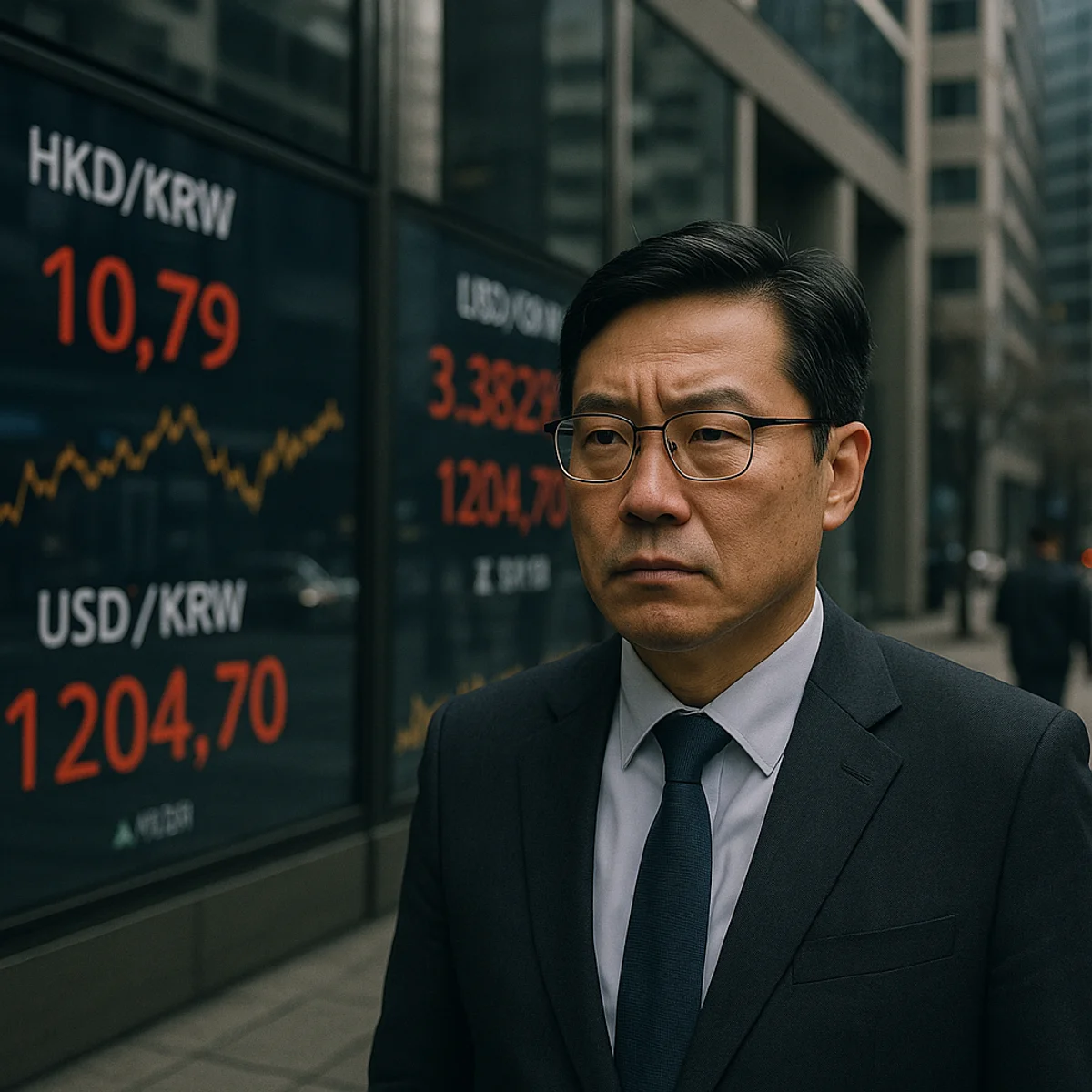
Korean Won Interest Rate and Exchange Rate Dynamics Amid Market Interventions
The Korean Won interest rate and exchange rate have become focal points in South Korea’s economic landscape as the currency market navigates global uncertainties and domestic policy responses. Recent weeks have seen the Korean Won trading in the high 1470 range against the US dollar, influenced by a combination of external factors such as the weakening Japanese Yen and internal measures implemented by South Korean authorities.
Factors Influencing the Korean Won Interest Rate and Exchange Rate
Despite the Bank of Korea’s firm commitment to stabilizing the Won, the exchange rate has hovered around 1476 to 1477 Korean Won per US dollar. This persistence is largely due to the Yen’s depreciation, which has surged to the upper 150s against the dollar, weakening the Won by comparison. The Bank of Japan’s recent decision to raise interest rates was expected to strengthen the Yen, but the slower-than-anticipated pace of further hikes has led to continued Yen weakness.
At the same time, strong dollar demand from importers in South Korea has bolstered the demand for US dollars, supporting the Won’s exchange rate at elevated levels. This demand is particularly impactful in the relatively quiet year-end trading season, where liquidity is lower and the market is more sensitive to real demand rather than speculative positioning.
Government and Central Bank Interventions
In response to these pressures, South Korean authorities have enacted a series of stabilization measures. The Bank of Korea convened an extraordinary monetary policy meeting to introduce a temporary ‘foreign currency reserve deposit’ system from January to June next year. This system allows financial institutions to earn interest on foreign currency deposits, encouraging liquidity and helping manage exchange rate volatility.
Additionally, the government has eased the burden of foreign currency liquidity stress tests and exempted financial institutions from the ‘foreign exchange soundness charge’ until mid-next year. These steps aim to reduce the cost of foreign currency borrowing, thereby increasing dollar supply in the domestic market and alleviating upward pressure on the Won’s exchange rate.
Furthermore, the National Pension Service is expected to engage in large-scale foreign exchange hedging activities, which market participants anticipate will influence exchange rate movements in the near term.
Implications for the Korean Won Interest Rate
The Korean Won interest rate environment remains closely tied to these exchange rate dynamics. With the policy rate currently between 3.5% and 3.75%, the central bank’s interventions are designed to balance inflation control with currency stability. The temporary foreign currency reserve deposit scheme offers financial institutions a near-policy-rate return on foreign currency holdings, which may influence lending and borrowing behaviors.
Analysts suggest that the interplay between global dollar strength, Yen weakness, and domestic demand for dollars will continue to shape the Korean Won interest rate and exchange rate trajectory. The central bank’s proactive stance and the government’s comprehensive policy toolkit are expected to mitigate extreme volatility, but the external environment remains a significant challenge.
Conclusion
In summary, the Korean Won interest rate and exchange rate are currently navigating a complex environment marked by global currency shifts and domestic policy responses. The weakening Yen and strong dollar demand have kept the Won under pressure, despite robust interventions by South Korean authorities. Measures such as the temporary foreign currency reserve deposit system and regulatory relief for financial institutions highlight the government’s commitment to stabilizing the currency market. Moving forward, close monitoring of global currency trends and domestic demand factors will be essential to understanding the Korean Won’s performance and interest rate outlook.
Leave a Reply
You must be logged in to post a comment.