
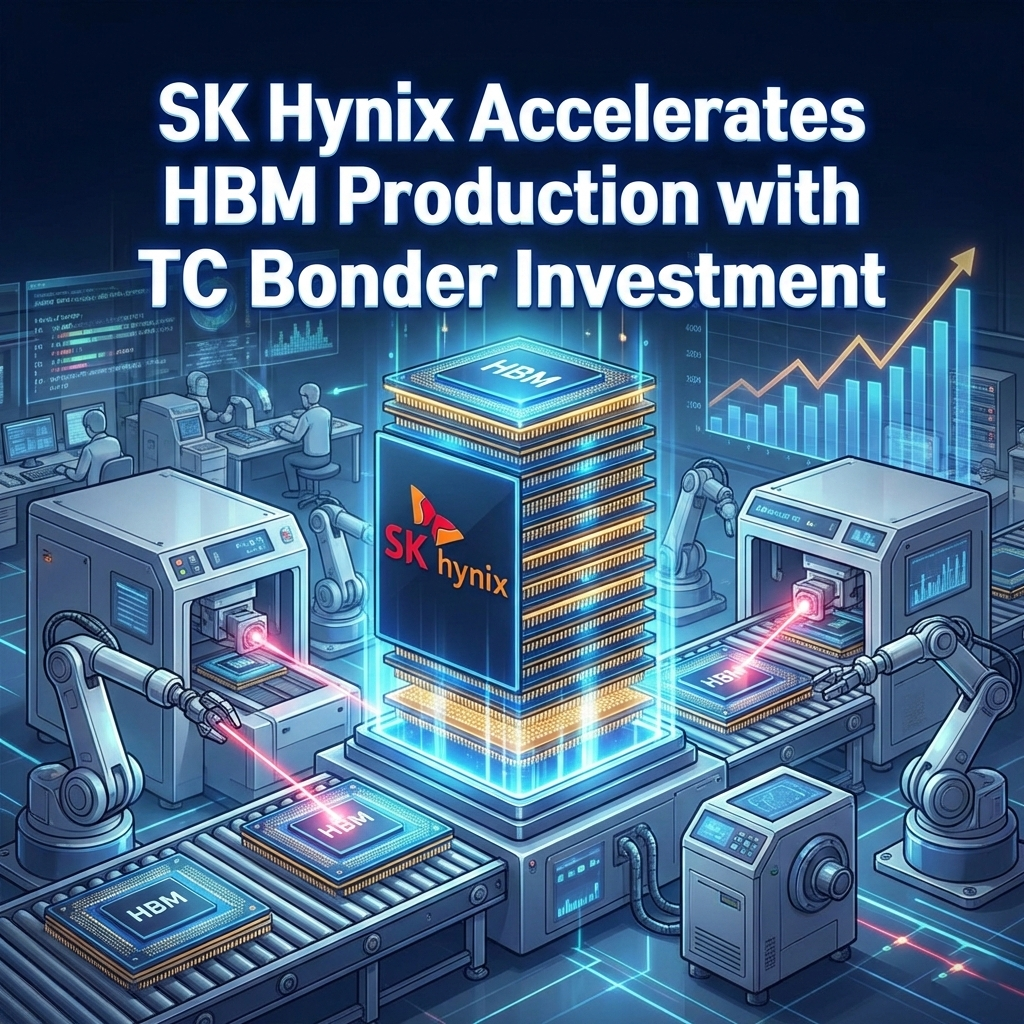
The global semiconductor industry finds itself in a period of intense innovation and strategic investment, with High Bandwidth Memory (HBM) emerging as a pivotal technology driving the next wave of computing advancements. At the forefront of this revolution, SK Hynix, a dominant player in the memory market, is making significant strides to solidify its leadership in HBM production, signaling renewed confidence and aggressive expansion plans.
Recent developments highlight SK Hynix’s strategic maneuvers, most notably its substantial investment in critical manufacturing equipment. The company has placed orders totaling approximately 9.7 billion KRW for ‘TC Bonders’ – thermal compression bonders – which are indispensable for HBM manufacturing. This substantial procurement sees both Hanmi Semiconductor and Hanwha Semitec participating simultaneously as suppliers, underscoring the collaborative effort required to scale such advanced production.
SK Hynix’s Aggressive HBM Expansion: A Deeper Look at TC Bonders
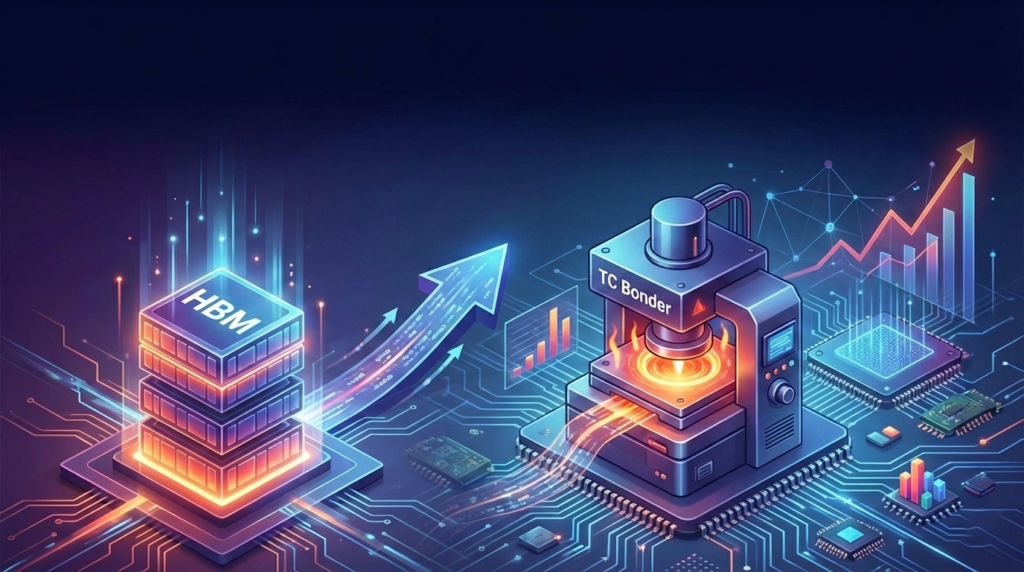
The decision by SK Hynix to restart and significantly ramp up equipment investment, particularly for TC Bonders, after a period of relative quiet in the latter half of last year, is a clear indicator of its commitment to strengthening HBM production capabilities. TC bonders are at the heart of HBM manufacturing, responsible for stacking multiple layers of DRAM dies with micro-bumps and connecting them vertically. This precise, high-temperature, and high-pressure bonding process is crucial for achieving the ultra-high bandwidth and power efficiency that defines HBM. The reported “TC Bonder 4” from Hanmi Semiconductor, specifically geared towards HBM4 production, further emphasizes SK Hynix’s forward-looking strategy, anticipating future generations of HBM.
This investment is not merely about increasing output; it’s about cementing technological leadership. HBM has become the memory of choice for Artificial Intelligence (AI) accelerators, high-performance computing (HPC), and graphics processing units (GPUs), where massive amounts of data need to be processed at lightning speed. SK Hynix has been an early pioneer and a dominant force in the HBM market, and this latest round of investment ensures it stays ahead in a fiercely competitive landscape, particularly as rivals also accelerate their HBM development.

The current fervor around HBM and the broader semiconductor market bears striking resemblances to past “super cycles” in the DRAM industry. Experts recall periods, such as around 2017-2018, when an explosion in demand for servers and mobile devices, coupled with a slower transition to finer processes by major manufacturers like Samsung Electronics and SK Hynix, led to a structural supply shortage. This imbalance caused the price of general-purpose DRAM to nearly double within a year, propelling both companies to unprecedented profit margins. The phrase “writing a new history for DRAM” is once again being used, but this time, the narrative is largely driven by AI and the insatiable demand for HBM.
The current environment suggests a similar structural shift. The exponential growth of AI necessitates memory solutions that can keep pace with advanced processors. HBM, with its stacked architecture and wide data pathways, perfectly addresses this need, creating a new category of “dream profit margins” for those capable of producing it at scale and with high yield. SK Hynix, having established an early lead in HBM technology, is well-positioned to capitalize on this ongoing wave.
Market Dynamics and Investor Sentiment
Despite the inherently positive news regarding SK Hynix’s strategic HBM investments, the broader market witnessed a nuanced reaction on January 14, 2026. The KOSPI index, after an impressive run that saw it breach the 4700-point mark for the first time, experienced a retreat, influenced by foreign investor selling. This broader market movement affected individual stocks, even those with strong underlying news.
SK Hynix’s shares, after an initial period of stability or even a slight uptick in early trading, ultimately closed lower, shedding around 1.08% from the previous trading day to settle at approximately 730,000 KRW. This contrasts somewhat with Samsung Electronics, which saw a modest rise of over 1%, attempting to reclaim the “140,000-won electronics” threshold. Other significant market players like Hyundai Motor, after an astonishing 10% surge to over 400,000 KRW the day prior, experienced a slight dip, reflecting profit-taking and market consolidation. The KOSDAQ also saw declines, moving below the 940-point level.
The slight dip in SK Hynix’s stock amidst positive investment news can be attributed to several factors. It might reflect a broader market sentiment of caution or profit-taking after a robust rally. Investors might also be weighing the immediate costs of significant capital expenditure against the longer-term revenue generation, especially given the competitive nature of the semiconductor industry. Nevertheless, the strategic rationale behind the HBM investment remains compelling for long-term growth.
The Road Ahead: Sustained Growth and Innovation
SK Hynix’s proactive investment in TC bonders and its continuous efforts to enhance HBM production capacity underscore a clear vision for the future. The company is not merely responding to demand but is actively shaping the landscape of memory technology. The collaboration with equipment specialists like Hanmi Semiconductor and Hanwha Semitec is crucial for achieving high yields and scaling production efficiently, creating a symbiotic ecosystem within the semiconductor supply chain.
As AI applications become more sophisticated and ubiquitous, the demand for HBM is expected to grow relentlessly. This sustained demand promises a period of robust profitability for memory manufacturers capable of delivering cutting-edge HBM. While market fluctuations and competitive pressures will always exist, SK Hynix’s strategic investments position it strongly to navigate these challenges and continue to lead the charge in the evolving world of high-performance memory, driving innovation and potentially writing another memorable chapter in the history of the DRAM industry.
Leave a Reply
You must be logged in to post a comment.